

"Just follow up more" is terrible advice
You've heard it before. There's money sitting in your CRM. There's opportunity in the leads already coming in. There's revenue hiding in your sales team's follow-up.
All true. But the advice that usually comes next is the worst advice in sales: just follow up more.
What does that even mean? More calls? More texts? More nagging your setters in Slack? "Follow up more" isn't a strategy. It's a vibe. And it lets the real problem off the hook, which is that your system is quietly leaking revenue at every stage between "new lead" and "closed deal."
So before we get into exactly where that money goes and how to pull it back, there's one belief you need to drop first:
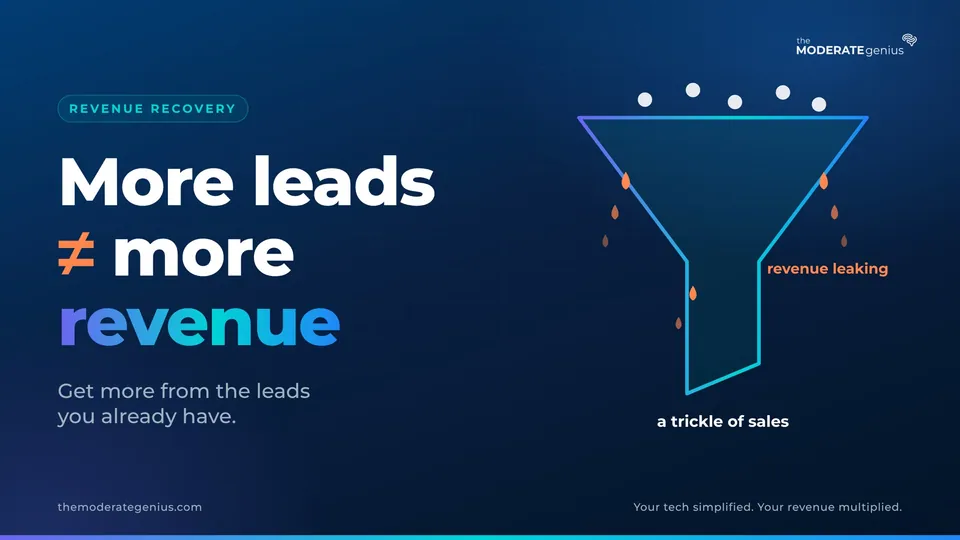
More leads does not always equal more revenue.
If your system is held together with duct tape, pouring more leads into it just means you're paying to leak faster. The leads you already have are often the easiest revenue you'll ever make. You just need to stop treating them like they're dead.
Your CRM is a waiting room, not a graveyard
Here's how most businesses think about their CRM: a lead comes in, nobody books them, and they get filed away as "stale." Static. Done. Another name in the graveyard.
But leads don't stop being people the moment they land in your CRM.
They're watching your YouTube videos. They're opening your emails. They're showing up to your webinars and scrolling your Instagram. Every one of those touches moves them a little closer to buying, whether your sales team is paying attention or not.
And buyers today consume a lot more content before they're ready to talk to anyone. Which means the leads sitting in your CRM right now are probably much closer to purchasing than you think.
So stop calling it a graveyard. It's a waiting room. Some of those people are ready to be called back in. The question is whether your system can spot them.
The $1 in, 50 cents out problem
Start with one simple question: when you put $1 into your system, how much comes back out?
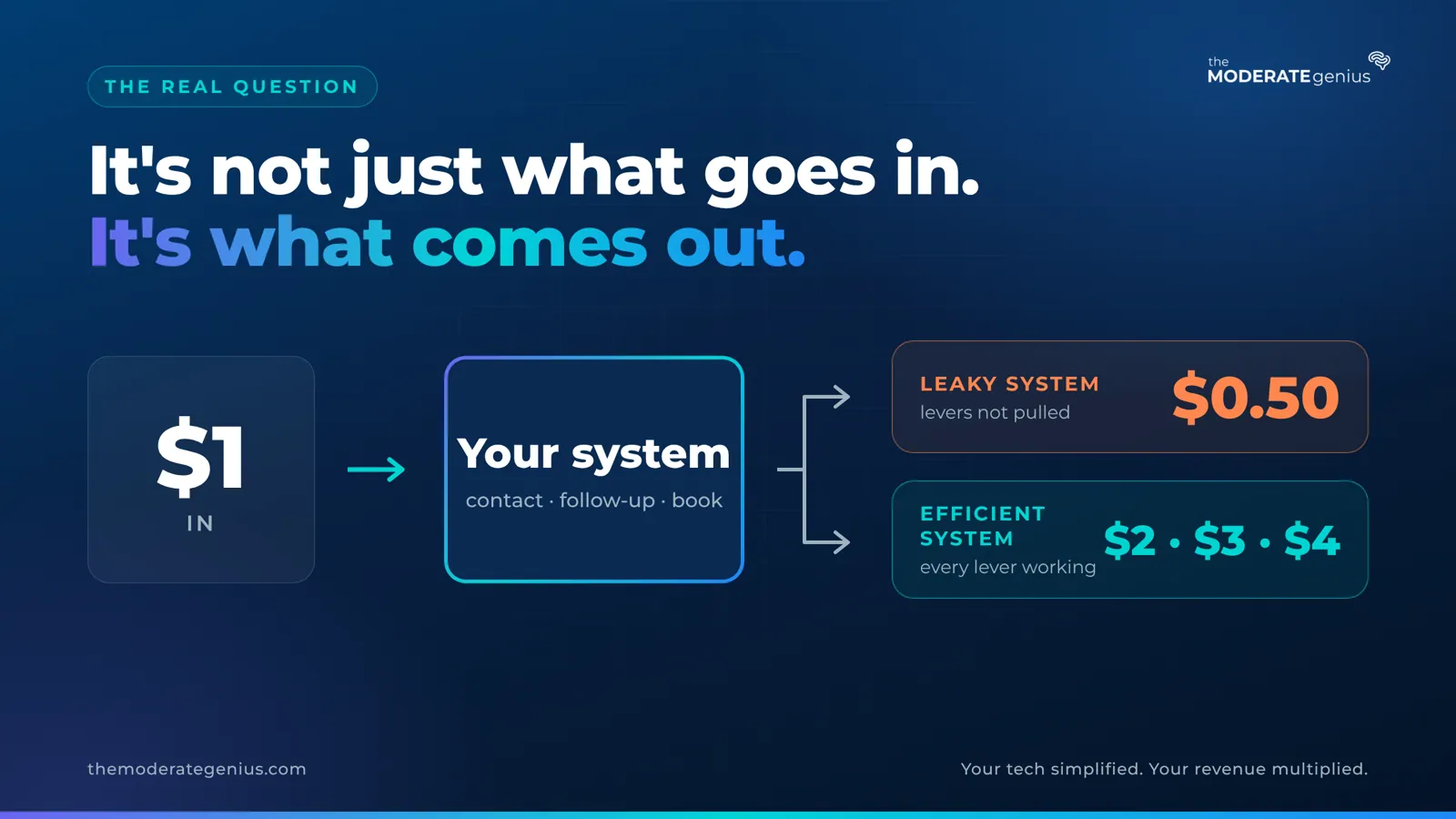
If your system is inefficient and you're spending heavily on marketing, that $1 might only return 50 cents. Not because your offer is bad or your closers are lazy, but because you're not pulling the levers that push more revenue through.
Take connection rate, the percentage of new leads your team actually gets on the phone. A typical number we see is around 4%. But we know that number can get up to 20%. Every extra lead you actually reach is another shot at a booked call, which means that same $1 starts returning a lot more than 50 cents. Your mileage will vary, but the gap between 4% and 20% is a lot of money.
Here's the part that stings. Most of us spend hours coaching the sales team on closing better and setting better. Those skills matter. But they're also some of the hardest skills to build. Fixing the system is often just a tech fix, and it can be far quicker.
Same 500 leads, two very different businesses
Picture two businesses that each get the same 500 leads.
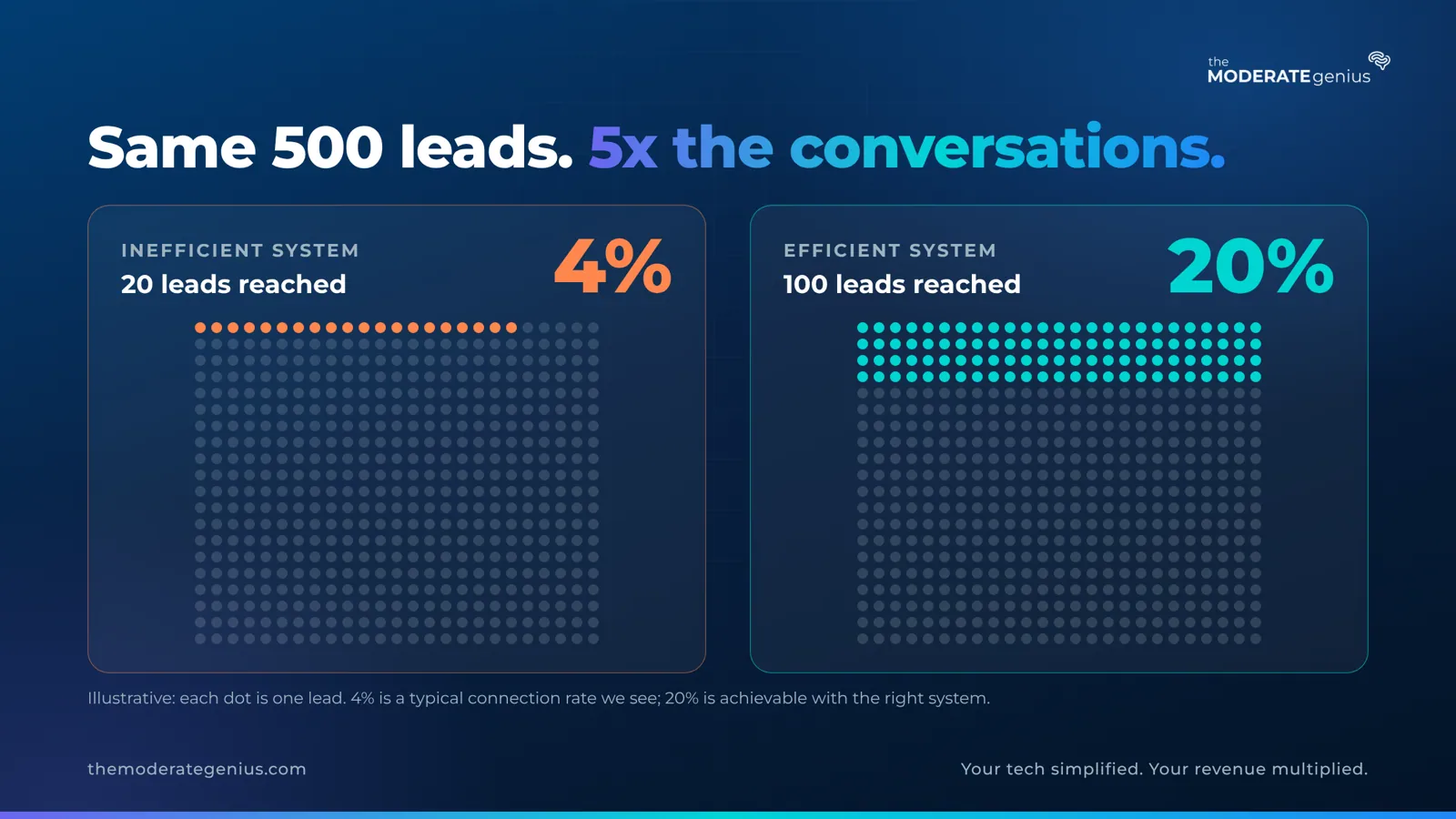
- Business A runs them through an inefficient system. It contacts 4% of them. Low output.
- Business B runs them through an efficient system. It contacts 20% of them. Higher output.
Business A now has to buy more leads just to book the number of calls it needs, because it's barely talking to the ones it already paid for. Business B doesn't need to. Same marketing spend, more calls, more sales, more profit.
One is paying to cover up a broken system. The other is getting a better return on every dollar it spends. Better system = fewer wasted leads = smarter ad spend = higher ROI.
Where the money actually leaks
So what's happening between "lead comes in" and "low output"? Here's the journey every lead takes, and where it leaks:
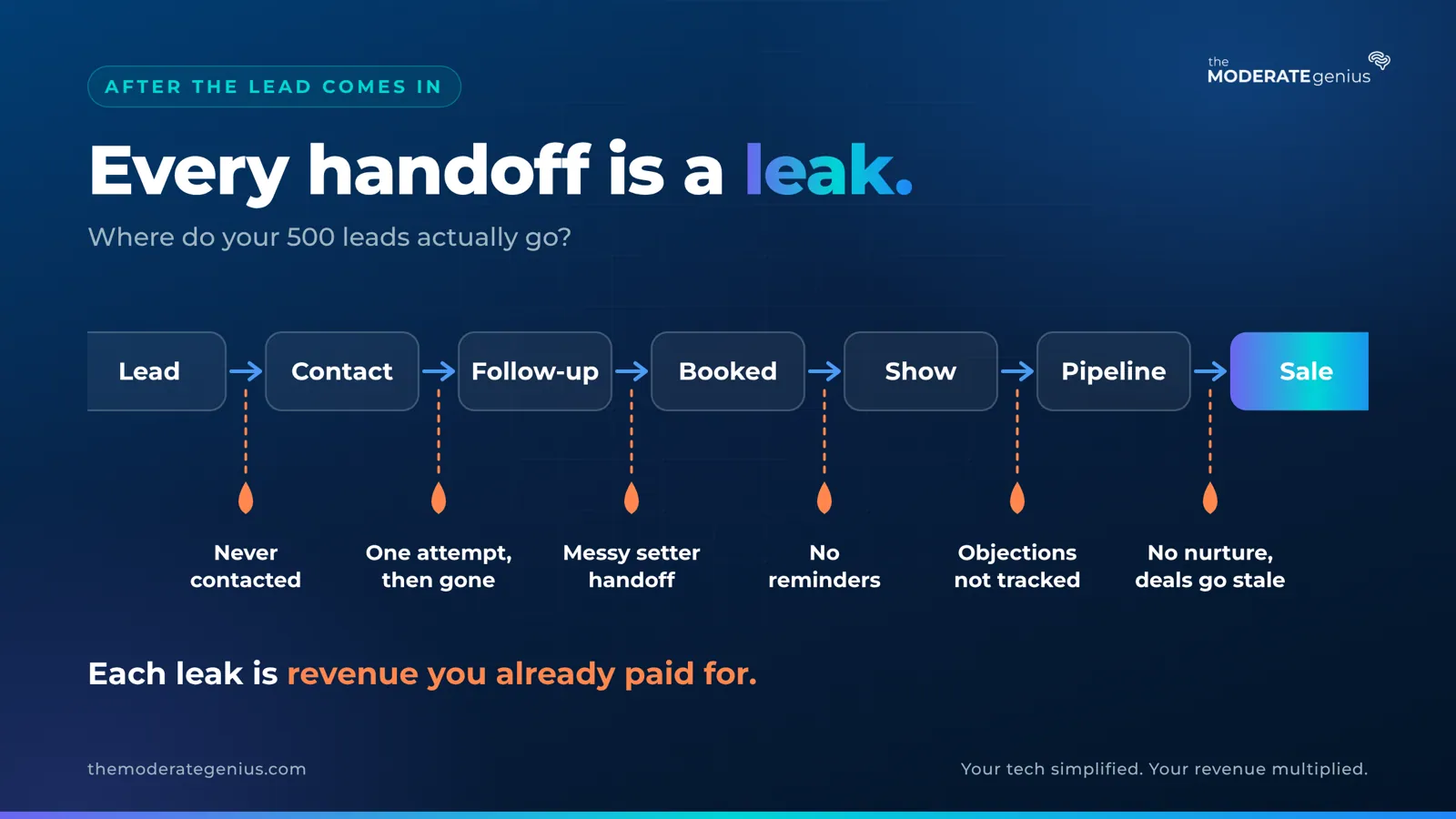
Sometimes a lead goes straight from showed to sale. Sometimes it sits in the pipeline first. Either way, every handoff is a place where revenue can fall through the cracks.
- Lead to contact. This is your connection rate. If it's low, every lead you don't reach is money you paid for and never used.
- Contact to follow-up. If your setters make one touch and move on, you're losing deals here. Worse, they'll come back asking you to buy more leads, because ten leads with one touch each and a 4% connection rate doesn't go very far. At 20% connection with multiple touches a day over several days, the "we need more leads" complaints get a lot quieter.
- Follow-up to booked. This is the handoff from setter to closer. Notes, setup, reminders. Most of it can be automated, and most of it usually isn't.
- Booked to showed. Are reminders going out? Is the closer doing their touch points before the call? Closers are back-to-back on calls, so sometimes the fix is as simple as an automated reminder to the closer themselves.
- Showed to pipeline. If the call didn't close on the spot, what happens next? Is it tagged as a cancel, a no-show or a live call? Are you tracking the objections that came up, so you know what your team needs coaching on? Does that lead go into a nurture sequence based on their objection, so they're warmed up for another conversation later?
Every gap in that chain is revenue going out the window.
The 5 places to find revenue already in your CRM
Instead of "follow up more," here are five specific gaps to look at. Each one is a system problem, not a people problem.
1. Speed to lead: how fast is the first contact?
When a new lead comes in, how long until someone actually reaches out?
When we run this for businesses, they almost always assume it's going to be hard to find out. Then we go into their CRM, apply a couple of filters, pull the number out, and the reaction is usually some version of "what in the world?"
Here's the thing: this is rarely your setters' fault. Your setters want to call faster. Faster calls mean more dials, more sets and more booked calls. But if they're hunting through the CRM to find new leads, there's no system helping them. A simple setup can push every new lead straight to a setter the moment it lands, so nobody has to think about it. The fewer decisions they have to make, the more likely it happens.
2. One-attempt drop-offs: who got one call and then vanished?
A lead comes in. The setter calls once. No answer. On to the next one. And that lead is forgotten.
Most people don't pick up the first call. They're busy, they're in a meeting, they don't recognize the number. Send a text first, then try again later, and your chances go up. There is a huge amount of opportunity in the calls that happen after the first no-answer. Most setter teams just don't make them, because there's no system telling them to and they're too busy chasing the next new lead.
3. Never-contacted leads: who did nobody ever reach out to?
This is the one that hurts. In some CRMs we've looked at, over 50% of leads were never contacted at all.
Think about what that means. If you spent $4,000 on marketing and half of those leads were never touched, $2,000 just burned. You paid for it and did absolutely nothing with it.
And to be blunt: that's not on your setter team. That's on the business owner for not having a system in place.
4. No-show and cancellation recovery: what happens after someone misses a call?
Someone books a call and doesn't show. Or they cancel. What happens next?
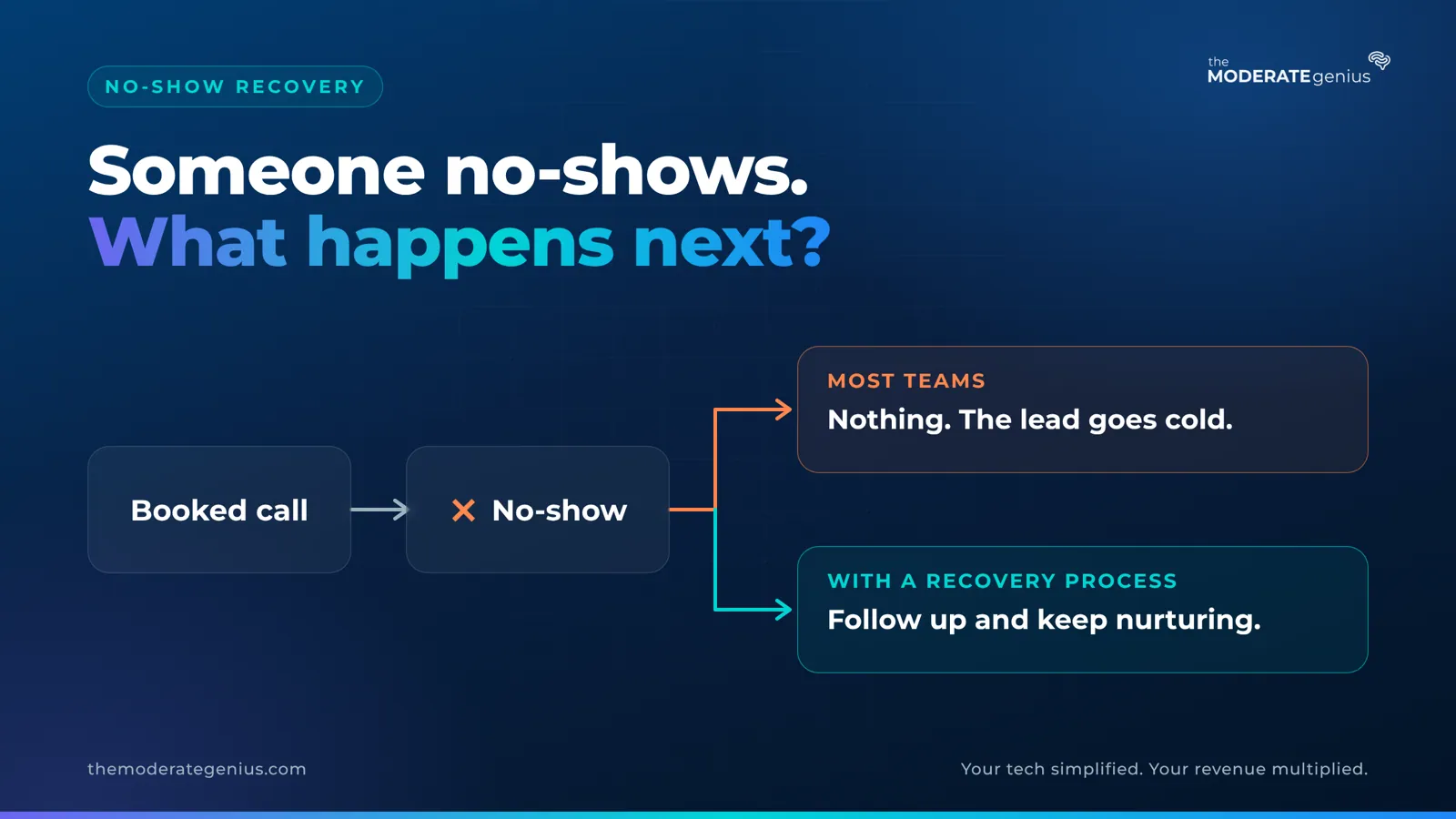
For most businesses, from what we've seen, the answer is nothing. "They didn't show, they clearly don't care, move on."
But think about it human to human. People get nervous. They change their mind after the setter call. Maybe the setter call wasn't great and that's why they no-showed. A simple human follow-up can change everything. Something like:
"Hey, we had a call booked and I'm not sure what happened."
"Honestly, I had second thoughts. I don't think it's right for right now."
"No worries at all. Let me send you some resources based on our first conversation that could help, and we can touch base when you're ready."
They might not rebook today. But now they're consuming more of your material and moving closer to buying. Ignore them, and you lose an opportunity that could have been a very good one later, just because nobody bothered to find out why they didn't show.
5. Stale pipeline: which opportunities are paused, and which are warming up?
Right now you have opportunities sitting in your CRM where nothing is happening. Booked calls that didn't close. Live calls. No-shows. Leads who had an initial call and said "not right now."
Most people treat these as dead. But remember the waiting room. These people are still watching, reading and engaging. If you can spot which of them look most like the deals that have already closed, they're worth reaching out to. Send them an email. Put an AI setter on them. Hand the warm ones to a real setter and book calls.
What this looks like in real life: $34K from "dead" leads
We built a tool inside the CRM for exactly this. It analyzes all of a business's closed deals, then scans the rest of the CRM for leads whose patterns most closely match them.
One client ran it. The tool handed them a list. They put that list into an AI setter, which did most of the early work. The leads who moved to the next step were passed to a real setter, who booked the calls.
The result: $34K collected across two deals, in the same week they started using the tool.
No new ad spend. No new leads. Just revenue that was already sitting in their CRM, waiting for someone to notice. Every business is different and this was one client's result, but it shows what's hiding in that "graveyard."
Can you answer these five questions?
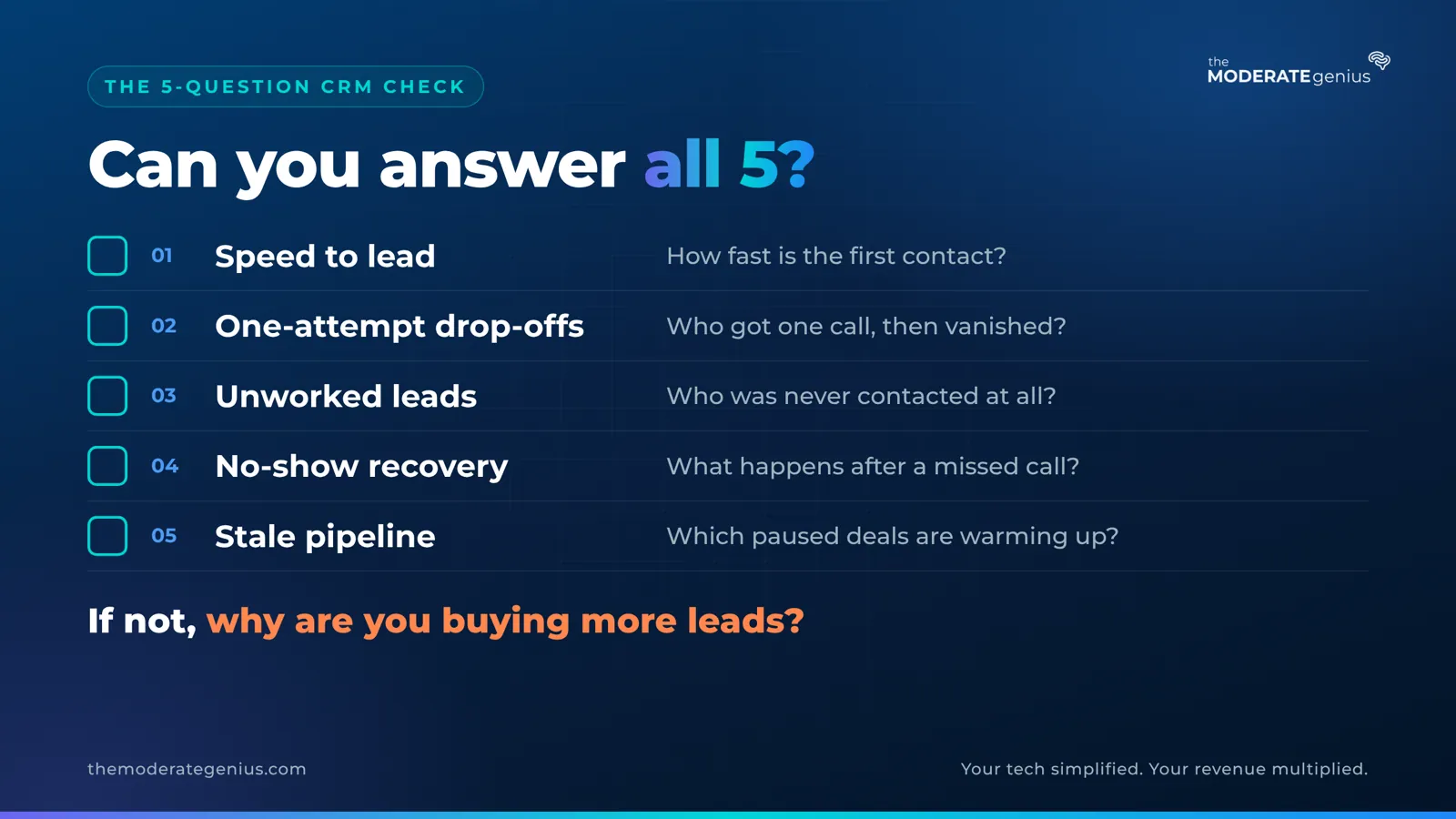
- Do you know your speed to lead?
- Do you know how many leads got one attempt and then dropped off?
- Do you know how many leads in your CRM have never been worked?
- Do you have a no-show and cancelled-call recovery process?
- Do you know what's in your stale pipeline, and which of those leads are moving closer to buying?
If you can't answer all five, you're probably bleeding revenue and don't even know it.
Get the answers for free: the Revenue Recovery Audit
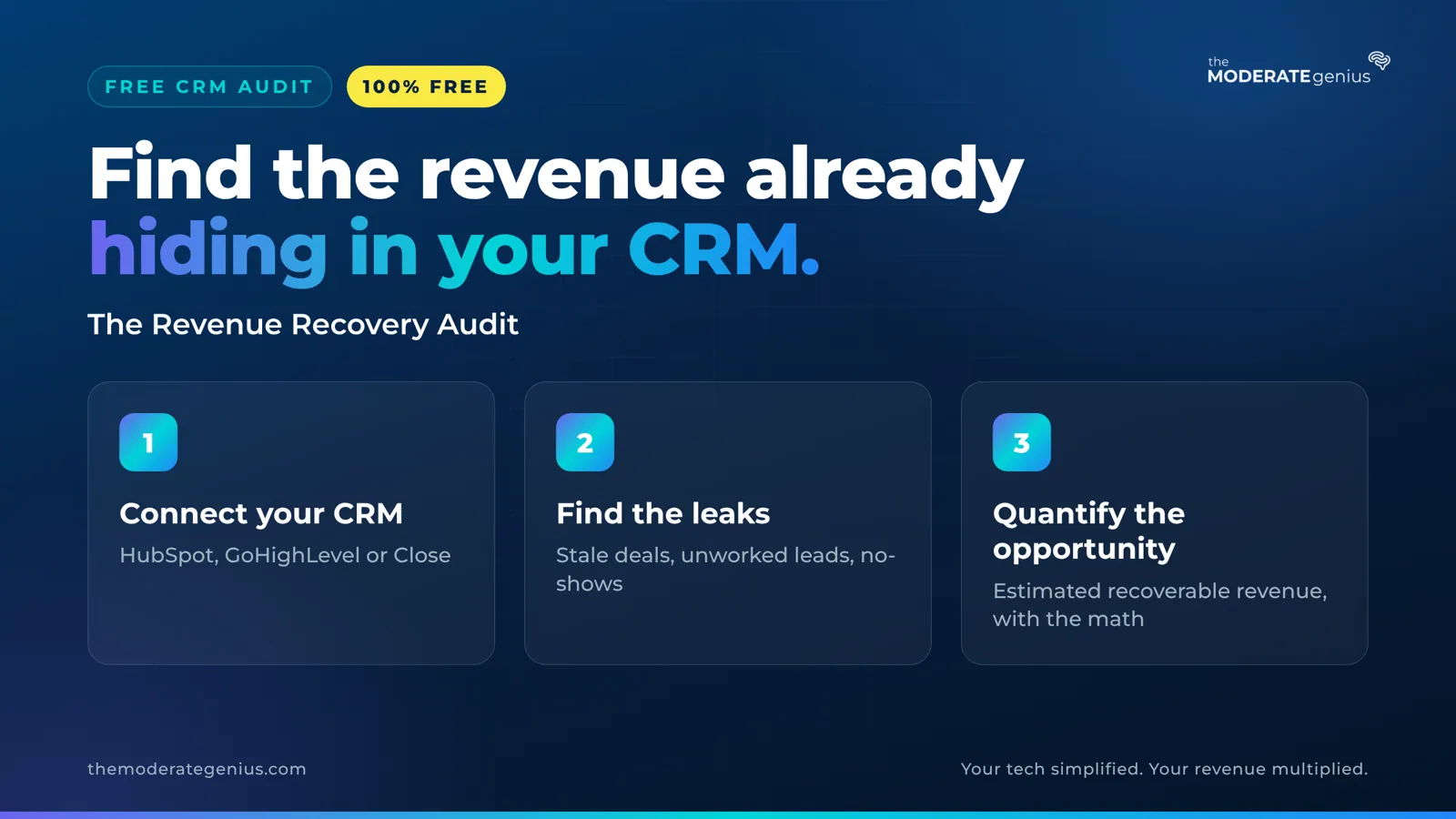
We built a free audit tool that answers all five of those questions for you.
Here's how it works:
- Create a free account.
- Connect your CRM. It works with HubSpot, GoHighLevel and Close.
- Run the audit. The tool walks you through each step.
- Get your report.
The report shows your estimated recoverable revenue, with the actual math behind it, so it's a real number and not a guess. It also shows how many more customers you could pull from your current data, and how that improves your marketing efficiency ratio (MER), which is simply how much revenue you get back for every dollar of marketing. The marketing you've already paid for produced those opportunities. Working them properly means more customers from the same spend.
You'll see a breakdown of:
- Stale deals in your pipeline
- Unworked leads that never got a single touch point
- One-touch drop-offs
- Speed to lead
- No-show losses
- Stage drop-offs (where there's enough data)
Then export it as a PDF and hand it straight to your team so you can put a game plan together.
It's completely free. No catch, no "pay later." Go in, run it, get the PDF and get your team working on it. And if you'd like us to walk through the report with you, we're happy to jump on a call.
Before you buy another lead, find out what's already sitting in your CRM.
Run Your Free Revenue Recovery Audit →
Results vary based on your current systems and team. The figures in this post come from our own audits and client work and are not a guarantee of similar results.